Your cart is empty
Tax included and shipping calculated at checkout

Drawer menu
Subtotal: $0.00
Tax included and shipping calculated at checkout

Olive oil has appeared in Mediterranean beauty traditions for generations, so it is easy to assume that a kitchen staple must also be a universal skin-care solution. The modern evidence is more nuanced.
Some research in healthy adults suggests that topical extra virgin olive oil may increase skin hydration and improve certain surface measurements. Other research has found that repeated topical use can weaken the skin barrier, particularly in people with dry, sensitive, or eczema-prone skin.
The practical answer is not that olive oil is always good or always bad for skin. Results can depend on the person, the condition of the skin, the amount used, the length of use, and whether the product was formulated and tested for cosmetic use.
A 2025 randomized study followed 54 healthy adults and compared extra virgin olive oil with petrolatum on small areas of the forearm. Both increased hydration and reduced some signs such as redness and skin temperature. Petrolatum produced the stronger overall effect and also reduced transepidermal water loss, a measure connected with the skin's ability to retain water.
That study is encouraging but limited: it tested healthy adult forearm skin under controlled conditions. It does not establish that food-grade olive oil is the best facial moisturizer, suitable for acne-prone skin, or safe for every skin condition.
An earlier randomized study of 19 adults found a different result. Applying olive oil to the forearm twice daily for four to five weeks reduced the integrity of the outer skin layer and caused mild redness. The authors warned that topical olive oil could aggravate atopic dermatitis.
A later dermatology review reached a similarly cautious conclusion for eczema and very dry skin, noting that the available evidence suggested olive oil may worsen those conditions.
These findings do not cancel every positive result. They show why broad promises such as “strengthens the skin barrier,” “calms sensitive skin,” or “will not clog pores” should not be made for everyone.
Avoid treating olive oil as a substitute for medical care or a dermatologist-recommended moisturizer. Extra caution is appropriate if you:
For acne-prone skin, the American Academy of Dermatology recommends looking for moisturizers labeled oil-free, non-comedogenic, or won't clog pores. Food-grade olive oil does not automatically carry those assurances.
Olive oil is not sunscreen and should never replace broad-spectrum sun protection.
A product sold for eating has not necessarily been formulated, preserved, or tested as a cosmetic. Anyone seeking a daily moisturizer or makeup remover should consider a product designed and labeled for that purpose.
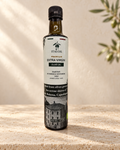
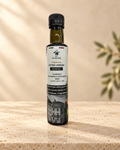
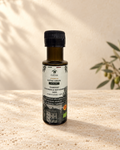
ITALOIL is made and sold as extra virgin olive oil for food. Its clearest role is in the kitchen: dressing salads, dipping bread, finishing vegetables, building marinades, and adding flavor to everyday meals.
If you discovered ITALOIL while researching Mediterranean ingredients, start with the use for which the product is intended. Explore the three current bottle sizes and choose the format that fits your kitchen, tasting, or gifting needs.
Shop ITALOIL extra virgin olive oil →
No universal conclusion has been established. A recent small study in healthy adults found some hydration benefits on forearm skin, while other research found weakened barrier integrity after repeated topical use. A cosmetic moisturizer tested for your skin type is the more predictable choice.
Do not assume that food-grade olive oil is non-comedogenic. If you are acne-prone, look for skin-care products specifically labeled oil-free, non-comedogenic, or won't clog pores.
Olive oil should not be presented as an eczema treatment. Some evidence suggests it may worsen the skin barrier in people with atopic dermatitis. Ask a dermatologist about an appropriate treatment and moisturizer.
No. Olive oil does not replace sunscreen. Use a broad-spectrum sunscreen according to its label and follow professional sun-protection guidance.
No. ITALOIL is sold as food. The bottle should be used and stored according to its food label.
This article is educational and is not medical advice. For a skin concern or reaction, consult a qualified health professional.